15 hours ago

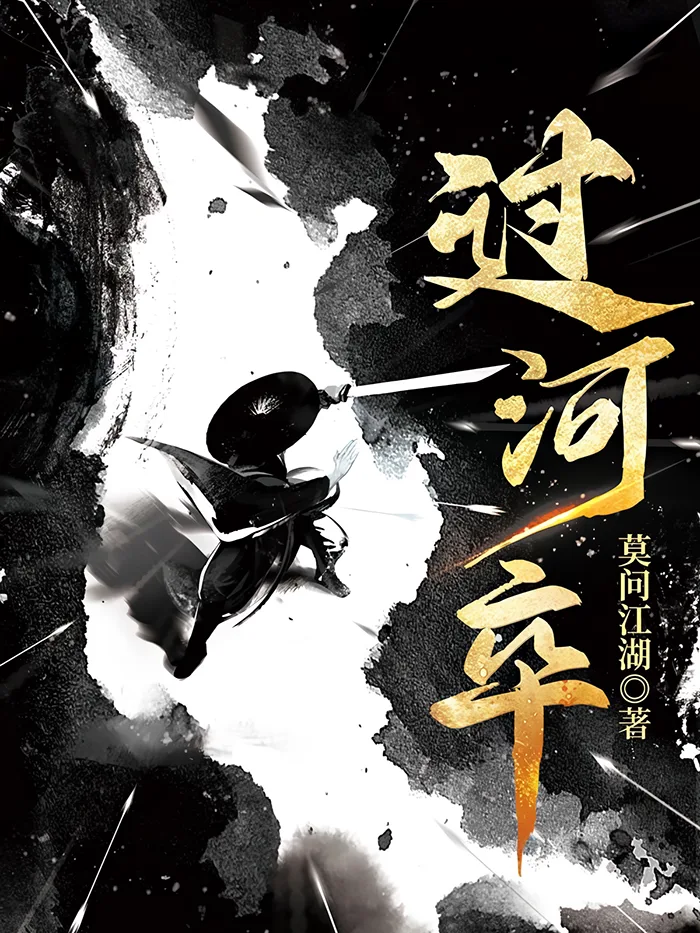
A Pawn's Passage过河卒

In a supernatural world where secret forces are at play in the courts, Qi Xuansu, a seventh-rank... Read more
In a supernatural world where secret forces are at play in the courts, Qi Xuansu, a seventh-rank Daoist priest, finds himself in a struggle to escape his fate as a pawn.

The only way to do so is by completing missions and earning enough merit to buy back his freedom.

But first, he must enhance his cultivation and climb the ranks of the Daoist Order.

Follow Qi Xuansu as he unlocks his potential in his journey toward self-realization and liberation!

***

Hello! I'm Clare, and I'm a new translator in the wuxia genre.

I am really looking forward to bringing you a thrilling new cultivation novel that focuses a lot on power struggle and self-liberation. I hope you will enjoy A Pawn’s Passage as much as I enjoyed translating it.

Your support and feedback mean the world to me as I embark on this exciting journey in the wuxia world. Thank you for being gentle and welcoming! Happy reading! 🙂 Collapse
  • Views: 67 768
  • Total views: 308 493
  • Comments: 47
  • Total comments: 329
Information
Users of Guests are not allowed to comment this publication.

Comments 47

  1. Offline
    + 10 -
    • 4.0
    4.0
    This is supposedly the second book of this storyline and I haven’t read the first or third book. It clearly doesn’t need you to read the other books and I don’t even know where they are but apparently those books have different main characters and are all different times in history. The third book being in the dharma-ending times so while the ending seems cut off it makes sense now that I think about it, and we’ll hopefully hear about it in that book.
    That story focuses more on external enemies which is the opposite of the internal enemies here.
    I finished this about a month ago and had my review accidentally deleted and got too lazy to write it again. Now I forgot what I said in that review but I’ll try.

    I’ll start with pros:
    The story has a lot of depth and has a variety of different types of characters with different motives. There aren’t any massive plot holes and no big mistakes that I could see with the world. It’s also fun seeing the mc gain power and his character development along the way. It’s especially nice to see the mc gain more confidence as time goes on. While there were many different types of countries and ethnicities, some might say it has a lot of racism, I’d say it isn’t only racism but also gives praise to different countries. For example I dislike how they show the westerners some times but I also like how they showed praise every time they introduced parts of their culture they use, for example auctions or banquets. The depth the author gives these countries is also reassuring. But he does put down some countries as weaker than the mc’s country but I wouldn’t call that racism per se. And the mc’s country isn’t the strongest country throughout the story, they are tied with the western country who has a completely different system. The mc sometimes dislikes some foreign things/actionsc but he also likes some of them, showing it isn’t just one sided hatred. This is a mix of a pro and a con, take is as you will. I also like the different abilities of the different “cultivation classes” and their abilities, but it might get confusing at times. Main character is also pretty nice, he has character and isn’t completely bland, with his own quirks. I mainly like the schemes from higher level cultivators/leaders of the Daoist Order, and how intricate they are. Of course it’s annoying when the mc is schemed against and is hopeless to do anything.

    For those who like quick action, stay clear. This novel has a lot of info dumps, and more than half of that info is not necessary. It does deepen the world depth but that usually is only needed when you’re hooked in the story, but here it comes straight away. You can skip some of these info dumps, for example if they start talking about a bridge and it’s historical meaning, which will not be talked about again later on. Also, the mc gains strength in an unnatural way, not through his own cultivation but through external means. He does actions that help him go up this political-like ladder in the Daoist organization and picks up the external means/items to help his cultivation through the Daoist organization or other means. Because of this, he gains strength pretty quickly compared to others and even though he starts low he quickly catches up and surpasses his peers. I also somewhat dislike the ending because it seems cut off but as I said before, the author probably wanted to show off what the mc did in the next book as history and maybe we‘ll even seethe mc in that book. Hopefully I can find it and find time to read it
    Read more
    1. Offline
      + 10 -
      Where are the other books? I’ve looked around but this seems to be the only book published under this author’s name.
      Read more
      1. Offline
        + 10 -
        Taiping Inn is the first novel (太平客栈) and Bai Yujing in the Sky (天上白玉京) is the second novel. I don’t know if that’s the exact name but I found this through the author name in Chinese 莫问江湖. I just searched up that Chinese version of his name and tapped the first link, and it shows his three books
        Read more
        1. Offline
          + 10 -
          Thanks. Taiping Inn is definitely closely related to this novel, just a few hundred years earlier. The main character of Taiping Inn seems to be the Holy Xuan of this novel.

          Only thing I’m not sure about is whether the ongoing third book is in the same world / setting as the other two.
          Read more
          1. Offline
            + 00 -
            Yeah in the last chapter of the mtl, in the authors notes it says it’s soon after this book, around the time of the end of dharma. I’m not sure if you know what that means but
            . I think that would be around 100 years later? Maybe less? I’m not sure to be honest, I forgot. I do know this mc will be still remembered and famous during the next novel, and even if he isn’t there he should be influential somehow
            Read more
    2. Online Offline
      Tir
      + 00 -
      I have a question! Does this novel have Immortals, not like cultivators but the realm which literally transforms you into otherworldly Immortals. I'm asking cause this feels more political/scheming type of novel, which does have cultivators and all but I want to know the upper limit of cultivation realms. Don't spoil me but do tell me if it has Immortals and such.
      Read more
      1. Offline
        + 00 -
        Yes there are immortals. Immortals can’t stay in the mortal realm (setting of the novel) for long, I forgot the exact amount but shouldn’t be more than 150, then they must ascend to the immortal realm. Some are immortals in this mortal realm, while there have been instances where immortals from the immortal realm descended into the mortal realm, and lived reincarnated lives until they became immortals again and ascended normally. But even these immortals scheme a lot. This is basic knowledge and isn’t really a spoiler.
        Read more
  2. Offline
    + 21 -
    From the very first chapter I realized this is a special book. Not another formulaic cultivation story, but something genuinely deep and noticeably different. And I don’t mean that as a lazy compliment — you can feel it in how the author builds the world.

    I’ve read 30 chapters… but it took me three attempts, about ten chapters per attempt. And I’m stepping back again.

    Why? Because this book is extremely heavy in terms of information density. In a weird way it reminds me of reading a quantum physics textbook: you’re not “just following the plot,” you’re trying to hold a massive amount of rules, terms, ranks, and context in your head — and the world doesn’t fully click unless you do.

    What makes it great

    In most novels, a character description is basically “what they look like, what they do, what they say.” Here it works differently: you see a person the way a full member of that society would see them, because the MC (and the author) constantly provides the social and institutional context.

    It’s not “a patch on a uniform.” It’s:

    * a marker of rank,
    * a marker of membership in a specific state organization,
    * and even the color can add extra meaning.

    You get detailed explanations about things like headwear types tied to cultivation levels, each with its own name, and strict appearance requirements by rank that are enforced by official rules — and it’s all described thoroughly, not in passing.

    The excerpt you included is a perfect example: it goes deep into embroidered emblems, civil vs. military symbols (birds vs. beasts), exceptions like the Green Phoenix Guard, the historical reasons behind uniform colors, and even the internal hierarchy and staffing numbers. It’s basically a mini-lecture on how the state works.

    And honestly — it’s impressive. It makes the world feel so real that you start thinking, “Yeah, a dynasty like this could actually exist.”

    So why am I not continuing?

    Here’s the paradox: the book is so good at creating realism that it becomes… hard for me to stay engaged.

    Not because it’s boring. It’s not.
    Because it’s overwhelming.

    When I read a scene, instead of smoothly moving through the story, I constantly have to:

    * remember ranks,
    * remember institutional structures,
    * keep track of named hats/robes/insignias,
    * hold onto symbolism,
    * process tons of Chinese names,
    * and deal with pinyin that my brain simply doesn’t “lock in.”

    At a certain point, reading starts feeling less like immersion and more like homework — as if the author gave you an incredibly rich world, but also handed you a reference manual and said, “Learn this first.”

    What would make it easier to read

    The only way I can realistically see myself continuing comfortably is if the translation/edition provided:

    * frequent translator notes (short but constant),
    * a small glossary for ranks and institutions,
    * and ideally even illustrations (for the hats, uniforms, emblems, etc.).

    Because otherwise, there’s just too much information to retain. And if you don’t retain it, you lose the point of what the author is doing.

    Overall

    I think A Pawn’s Passage is a very good book — so good that the world feels real.
    But that same realism, combined with the sheer amount of detail, makes it exhausting: I can’t read it in a flow; I have to stop, process, and memorize.

    Who might love it: readers who enjoy dense, almost encyclopedic worldbuilding and don’t mind reading slowly, like studying a setting.
    Who might struggle (like I do):
    readers who want immersion through events and emotion rather than a constant stream of ranks, rules, and institutions.

    In short: the book is impressive — but it demands not just attention, it demands stamina.
    Read more
  3. Offline
    + 20 -
    • 5.0
    5.0
    A Pawn’s Passage

    (Current: Ch. 884 | Completed in CN: 2,377 chapters incl. side stories)

    I’ll give a fully detailed final review once I catch up to the latest chapters, but even at this point, A Pawn’s Passage has already proven itself to be something special.

    To be honest, this novel could have become a truly legendary work in the wuxia–xianxia hybrid genre if not for its occasionally hectic infodumps.
    That said, its pros overwhelmingly overshadow its cons, and because of that, it has already become my personal Best Novel of 2025 so far.

    This is a story that feels worth following, not just consuming.

    Why This Novel Stands Out

    A Pawn’s Passage is not your typical xianxia.

    It doesn’t rely on shallow power fantasies, repetitive breakthroughs, or endless jade-beauty tropes. Instead, it focuses on:

    Schemes layered on top of schemes

    Relentless political and religious maneuvering

    Constant action that actually carries consequences

    A grand, long-term plot rather than short-term hype

    The story is driven by planning, positioning, and systems, not blind luck or cheat-level cultivation. The protagonist doesn’t bulldoze the world—he learns how the board works and moves accordingly.

    Worldbuilding: One of Its Strongest Pillars

    The worldbuilding is ambitious and intelligently structured.

    Everyone can become a cultivator

    Mortal empires themselves are cultivator-run states

    Power isn’t limited to sects alone—it flows through religion, governance, and ideology

    In the Eastern region, three major sects/religious powers compete for supremacy, each striving to become the official faith of mortal empires.

    That’s only one side of the coin.

    The other side is the Western Church from the Western Regions, setting the stage for a much larger clash—one that goes beyond cultivation and into civilization, belief systems, and authority.

    At that point, you know exactly where the story is heading, and the scale keeps expanding without losing coherence.

    Romance Done Right (Rare in This Genre)

    One of the most refreshing aspects of A Pawn’s Passage is its romance.

    This is pure, restrained, and meaningful romance:

    No carousel of jade beauties

    No forced emotional drama

    No hollow or failed romance tropes

    The relationships develop naturally, feel earned, and actually matter to the narrative. It avoids the common pitfalls seen in many popular xianxia works and treats romance as part of character growth, not decoration.

    The Main Flaw

    The biggest weakness is clear:

    ⚠️ Heavy infodumps, especially in certain arcs.

    At times, exposition slows the pacing and demands patience. However, this information exists to support long-term narrative payoff, not as filler—and once the groundwork is laid, the story becomes increasingly rewarding.

    Final Thoughts (So Far)

    A Pawn’s Passage is ambitious, intelligent, and unapologetically complex.

    It may not appeal to readers who want instant gratification, but for those who enjoy:

    Deep worldbuilding

    Political and religious conflict

    Schemes with lasting consequences

    Meaningful romance

    A slow-burn rise through real power structures

    —this novel delivers something genuinely rare.

    With tighter exposition, it could have been legendary.
    Even as it stands, it is one of the strongest wuxia–xianxia hybrids I’ve read in recent years.

    If the later arcs maintain this quality, A Pawn’s Passage won’t just be remembered as good—it will be remembered as important.
    Read more
    1. Offline
      + 00 -
      Bro is mtl (Gemini) upload by panic readable??
      Read more
  4. Offline
    + 11 -
    May be try the name “ Way of a Pawn “ is better than A pawn passage
    Read more
  5. Offline
    + 00 -
    Idkw but every chapter I try to click on shows an error and tells me I need to go back. Anyone know how I can fix this?
    #panic#
    Read more
  6. Offline
    + 10 -
    It's a good leisurely novel. I only wish I had time to read probably around 1300+ chapters, but my phone died and I lost all my data, so I'm unlikely to finish this story(

    At times I was saddened by the MC being too weak. I can't remember how many times he was saved by "mom", 3 "friends" and others.

    The romance isn't bad, by the way.
    Read more
    1. Offline
      + 20 -
      Wait what do you mean, did you have it all translated but lost it?
      Read more
  7. Offline
    + 91 -
    Read this till chapter 230
    Someone jn the comment section said-" the cultivators are bureaucrats" and I agree 💯
    The cultivation society is not uniform. they have taken elements from the real world herethere are ranks within the society for the daoist priests. From 9 to 1. People are promoted to a rank 4 if they have a certain backing and such. But after that it based purely on merit. Cultivation can help but they take you only a little.
    Here ones cultivation and intellect are taken into account before being promoted higher in the social ladder.
    The politics are interesting. In the later chapters the politicking gets extreme.
    The mc is a grunt in the machine so he doesn't know too much. But he is connected to a person who knows someone so he has some information.

    The only bad thing about this is that there is a f#ck ton of exposition. Like a f#ck ton.
    They overload you with it. Like they explain the entire model of the government when they introduce one character in the government.
    Likes it good to know that but there is so much that gets lost in this sea of exposition. They should have given it in portion imo.

    Over all I liked it
    Read more
    1. Offline
      + 10 -
      One thing I dont understand is when they say ascended to the heavens do they mean ascension to higher realm or death by old age.
      Like damn confusing. Sometimes I think they are saying this then after a few chapters I think not

      Can someone pls confirm?
      Read more
      1. Offline
        + 20 -
        The first one oru2x
        Read more
  8. Offline
    + 31 -
    Much better mtl on wtrnovel. I wish they just took the mtl from there bec ranobes always has horrible mtl.
    Read more
  9. Online Offline
    + 50 -
    Info dump: The novel
    Not bad, just a solid 7/10
    Read more
  10. Online Offline
    + 50 -
    I thought it was a picture of penguin
    Read more
    1. Offline
      + 31 -
      It is a duck
      Read more
      1. Online Offline
        + 20 -
        That's actually my second thought 😂
        Read more